 STANDARD ALLOYS INDIA
Home / Industries / Aggregate
Aggregate
Crusher wear parts for quarries, where cost per tonne crushed is the number that matters.
Quarries crush everything from soft limestone to abrasive granite. The same crusher needs a different liner for each, so we ask about the rock before we recommend the alloy and the profile.
Feeding and scalping
Grizzlies and chutes take the first impact of blasted rock and send the fines around the primary crusher.
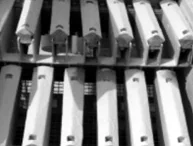
Jaw crushers
The primary crusher takes the largest rock. Jaw plates must stay tough while their teeth wear evenly.
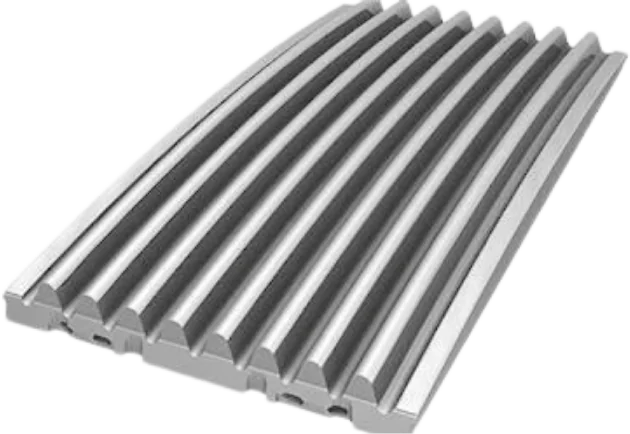
Cone crushers
Secondary and tertiary cones shape the final product. Liner life and profile decide both cost and product size.
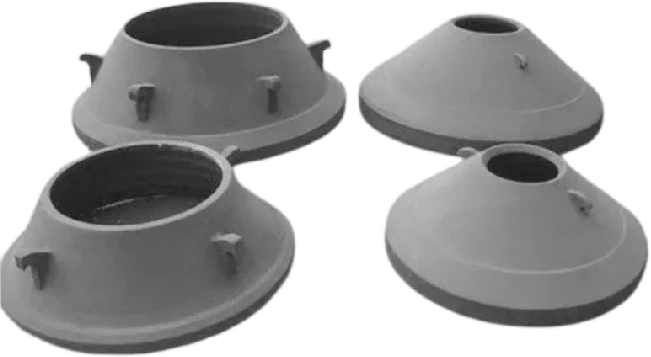
Concaves and mantles
- Fails by
- Profile wear that opens the setting
- Usual grade
- Manganese steel
Bowl liners
- Fails by
- Wear in the parallel zone
- Usual grade
- Manganese steel
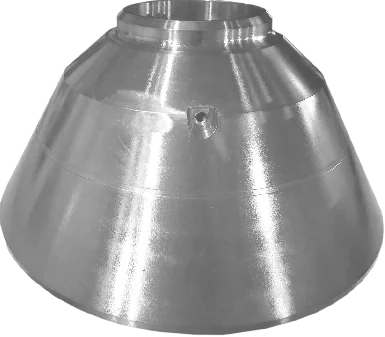
Crusher heads and sockets
- Fails by
- Wear and loss of fit at the seats
- Usual grade
- Carbon or low-alloy steel
Impact crushers
Horizontal-shaft impactors throw rock against the aprons at speed. Blow bars need hardness for wear and enough toughness to survive tramp metal.
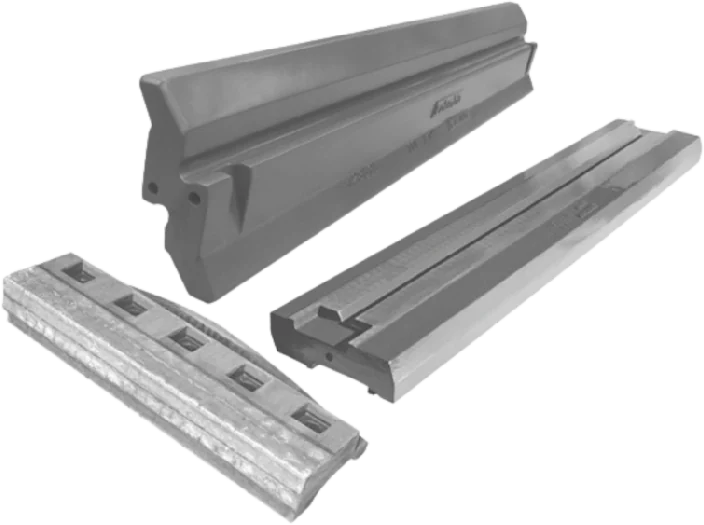
Blow bars
- Fails by
- Edge wear that rounds the striking face
- Usual grade
- Manganese steel, Cr-Mo steel, High-chromium iron
Impact plates
- Fails by
- Wear in the main impact zone
- Usual grade
- Manganese steel, Cr-Mo steel, High-chromium iron
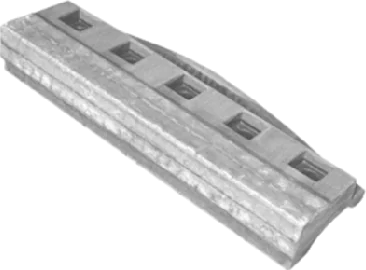
Grinding paths
- Fails by
- Wear that opens the gap to the rotor
- Usual grade
- Cr-Mo steel, High-chromium iron, Manganese steel
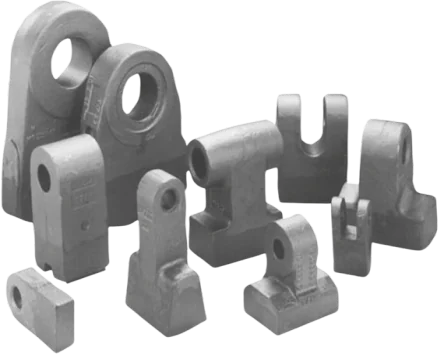
Hammers and beaters
- Fails by
- Wear at the striking head
- Usual grade
- Manganese steel, Cr-Mo steel
Why quarries choose us
- Alloy matched to the rockLimestone and granite need different liners, so we ask before we quote.
- Patterns on fileMore than 10,000 patterns, so many common crusher parts are ready to mould.
- Shipped anywherePacked and documented for export to plants anywhere in the world.
Have a casting problem? Send it to us
A drawing, photographs of the worn part or just the equipment model: any of them is enough to start. Our metallurgists recommend the grade if you don’t know it.